







Your event is two hours in. By any visible measure, it is going well: people are talking, the food has been appreciated, and no one has left early. And yet something in the room is slightly off. The energy has flattened. A few guests are standing near the door, doing the quiet calculation of when it is acceptable to leave. Two people who arrived together have spent the entire evening talking only to each other. Someone you specifically wanted to introduce to someone else has not yet crossed the room to meet them.
You feel all of this. You can't name it precisely. And because you can't name it, you can't respond to it.
This is the small gap that separates the host who produces a nice evening from the host who produces a gathering people reference months later. Not the food. Not the guest list. Not the logistics, which both hosts executed equally well. The difference is the ability to read what the room is communicating, in real time, through the specific signals that people in social situations broadcast continuously and largely unconsciously, and to respond with small, precise interventions that change the social trajectory of the evening without anyone noticing that an intervention was made.
This is a learnable skill. It has a framework. And once you have the framework, you cannot walk into a room without seeing it.
Creating Meaningful Gatherings
- Create a welcoming atmosphere for all guests
- Plan for easy conversation and mingling
- Include options that bring people together
- Consider the comfort and flow of your space
- Focus on shared experiences over perfect details

Why Most Hosts Stop Observing
The first thing to understand about reading a room is why most amateur hosts don't do it.
It is not inattention. It is displacement. The host who is managing the food, tracking what needs to be replenished, checking on the kitchen, and coordinating the timing of the next thing, that host is physically present in the room and socially absent from it. Their cognitive bandwidth is consumed by logistics. They see the room, but they are not watching it. The difference between seeing and watching is the difference between processing the room as a setting and reading it as a social system.
Research on divided attention, specifically on the cognitive cost of switching between task management and social observation, shows that these two activities compete for the same cognitive resources. A host who is actively managing multiple logistical variables cannot simultaneously maintain the quality of social attention that reading a room requires. The logistics win because they are concrete, urgent, and have immediate visible consequences if neglected. The social observation loses because its consequences, the missed cue, the unnoticed clustering, the guest who needed a bridge and did not get one, are diffuse, delayed, and invisible.
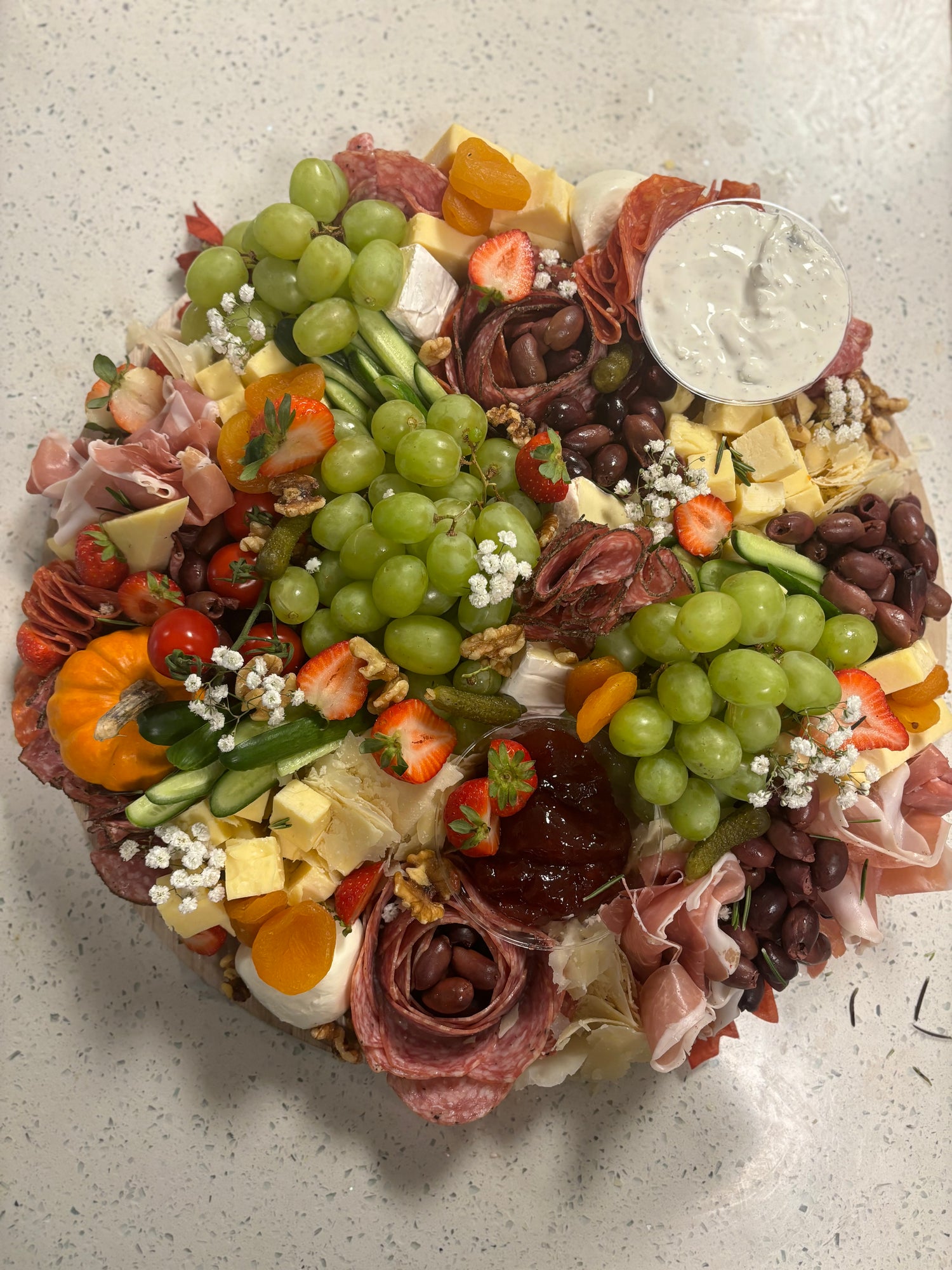
This is one of the most direct arguments for offloading the logistical dimensions of hosting, particularly the food, which is the most consuming and the most interruptive of the variables a host manages. The host who is not managing a kitchen is the host who can watch the room. And the host who can watch the room is the host whose gatherings feel different from everyone else's.

The Language the Room Speaks
Every social gathering is a continuous broadcast. The people in it are communicating at all times, through posture, proximity, eye contact, and the subtle behavioral signals that social psychology has spent decades cataloguing. Most of it happens below the level of conscious awareness. None of it is random.
To read a room is to understand this language fluently enough to respond to it in real time. Not to control the gathering, to serve it. To notice what is working and protect it. To notice what has stalled and move it forward. To make small, precise interventions that change the social trajectory of the evening without anyone in the room knowing an intervention was made.
Here are the most common signals that a gathering is beginning to fragment, and exactly what to do about each one.

Body Orientation: The Most Reliable Signal in the Room
Before words, before facial expressions, before anything else, the body tells you where the mind is.
Research on nonverbal communication by Albert Mehrabian established that physical orientation, the direction a person's torso is facing, is one of the most reliable indicators of psychological engagement and social interest. A person whose torso is fully oriented toward the person they are speaking with is engaged. A person whose torso is turned slightly away, toward the room, toward the exit, is not fully present in the conversation they appear to be in. They are already elsewhere, even if their words have not caught up yet.
For a host, reading body orientation across the room gives a rapid, accurate assessment of where the genuine conversations are and where the social courtesy conversations are. The genuine conversations are easy to identify: both parties facing each other fully, neither scanning the room, the body language closed and self-contained. These conversations do not need the host's attention. They are working.
The courtesy conversations are equally easy to identify once you know what to look for: both parties oriented slightly outward, one or both scanning the room periodically, the conversational energy polite but searching. These conversations need a bridge, a host intervention that either deepens them or releases both parties to find something more engaging.

Clustering: What It Means and What to Do About It
Clustering is the default social behavior of people who do not know where else to go. It's not a problem with the guests. It is a problem with the room.
When people arrive at a gathering and find no clear social orientation, no focal point in the center of the room, no host making introductions, no architecture that pulls them away from the people they arrived with, they cluster. They find a spot, establish a territory, and the social cost of leaving that spot gradually increases as the evening progresses. The cluster that forms in the first fifteen minutes tends to hold for the rest of the gathering.
Early clustering is normal and not a cause for alarm. The host's job in the first thirty minutes is to be in motion, greet guests at the door, orient them toward the center of the room, and make the first introduction within ten minutes of their arrival. A host who is moving through the room permits others to move. A stationary host, managing a kitchen, holding court in one spot, sends the implicit signal that the room has settled and that the clusters that have formed will hold.
Late clustering, groups of two and three that have been static for more than an hour, that show no signs of mobility, where guests are clearly in their comfort zone and not moving toward anything new, is the signal to introduce the food if it has not already been placed. A central spread that requires an approach breaks clustering faster and more gracefully than any social programming. The movement it creates is natural rather than managed. Nobody knows if a host intervened. The room simply starts moving.

The Wall: Reading Isolation Before It Calcifies
The guest standing alone near a wall is the cue most hosts notice and the one they most often respond to incorrectly.
The incorrect response is to acknowledge the isolation from a distance, a sympathetic glance, a wave, the mental note to get to them in a few minutes. The few minutes pass. The guest has now been standing alone long enough that approaching them feels to both parties like a rescue rather than a social gesture. The isolation has calcified.
The correct response is immediate and specific. Walk over, within two minutes of noticing. Do not go alone, bring the guest into a conversation already in progress, or bring another guest with you to make an introduction. The introduction is key. A guest who has been brought into a conversation and given a specific interesting detail about the person they are meeting is no longer isolated. They are oriented. They have a reason to be exactly where they are.
Research on social ostracism, specifically Kipling Williams' work on the experience of being excluded from social groups, found that even brief periods of perceived social exclusion produce a measurable negative effect on mood, sense of belonging, and self-esteem. The guest standing alone at a wall is experiencing a version of this, even in a gathering that is not intentionally excluding them. The host who notices and responds quickly does something that matters more than they realize.

The Depth Signal: What to Protect and What Not to Interrupt
Connection, when it actually happens at a gathering, is visually distinct from courtesy conversation. The body language is different, the energy is different, and the host's job is different.
The depth signal looks like this: two people fully facing each other, body language closed off from the rest of the room, neither scanning their environment, the conversation self-sustaining with no visible search for an exit. One or both people may be leaning forward slightly. The physical proximity is closer than it was earlier in the evening. The conversation has slowed, fewer words per minute, more space between exchanges, more listening.
This is the gathering working. This is the outcome the host designed the room for.
The host's job when they observe the depth signal is to do nothing except protect the conditions that produced it. Do not interrupt. Don't redirect. Don't bring someone else over to join the conversation. Don't ask if anyone needs a drink. Two people in genuine conversation are in a fragile state; the intrusion of a third party, even a welcome one, changes the dynamic in ways that cannot be undone in that evening.
Walk past. Acknowledge with a glance if eye contact is made. Move on. The most important thing a host can do when a real connection is happening in their room is to leave it alone.

The Energy Drop: The Most Mismanaged Moment in Any Event
Every gathering has a natural arc. Energy builds through the first hour as guests arrive and conversations form. It peaks somewhere in the second hour when the room is warm, and the conversations have found their depth. And then, usually ninety minutes to two hours in, it begins to drop.
The energy drop is not a failure. It is information. It tells the host that the gathering has reached the end of its first natural phase and is asking for a decision: deepen or close.
Most hosts miss this signal entirely because they are not watching for it. The first indicator is a subtle change in the sound of the room, conversations becoming shorter, the ambient noise level dropping slightly, the laughter becoming less frequent and less spontaneous. The second indicator is physical: guests beginning to shift their weight, check their phones briefly, make micro-adjustments to their posture that signal a recalibration.
The host who catches the energy drop in its early stages has two good options.
The first is to deepen. Shift the gathering from standing to seated if it has been standing. Move from the main room to a smaller space if one is available; the physical compression of a smaller room raises the social intimacy of the conversation. Introduce a question to the room, one genuine, open question that requires a real answer and resets the conversational energy. The right question can carry a gathering for another hour.
The second is to close. On a high note. Before the drop becomes visible to everyone in the room. The gathering that ends while the energy is still good, that leaves people wanting more rather than relieved to be leaving, is the gathering people want to repeat. The close is a skill as specific as the welcome. It requires the host to call the evening, to say something genuine that marks it, and to give every departing guest the specific bridge to the next one.
The host who closes on a high note is the host whose guests are already looking forward to the next gathering before they have reached the elevator.

The Exit Signal: The Bridge That Makes the Recurring Gathering Possible
A guest who is making quiet goodbye rounds, checking their coat, thanking the host, doing the gentle extraction from one last conversation, is telling the host something specific. The gathering met their need, and they have reached their social capacity for the evening. They are not leaving because something went wrong. They are leaving because something went right and they are full.
The exit signal is the moment for the specific bridge.
Not "so glad you could come", which is a closing that goes nowhere. Not "we should do this again soon", which is a social nicety that both parties know is not a commitment. The specific bridge is: "We're doing this again on the fourteenth. I'll text you the details." A date. A commitment. A named next step that converts a one-time guest into a recurring one.
Research on social commitment and follow-through shows that the specificity of a plan is the strongest predictor of whether it will happen. "We should get together sometime" has a very low conversion rate. "Are you free the fourteenth?" has a significantly higher one. The host who makes specific bridges at the end of each gathering is building the recurring community in real time, one departure at a time.

Putting It Together: The Observing Host
The host who can read all of these signals, who arrives at their own gathering with the logistics handled and their attention free, occupies a particular and powerful social position. They are not the most entertaining person in the room. They are not the loudest or the most professionally impressive. They are the person who watches the room with genuine care and responds to what they see with small, precise, almost invisible interventions.
They bring the isolated guest into a conversation. They protect the genuine exchange from interruption. They make the introduction at the right moment. They read the energy drop and make the decision to deepen or close before the gathering makes that decision for them. They send every guest away with a specific date and a specific reason to come back.
None of this is visible to the guests. That is the point. The gathering feels effortless because the host has worked, quietly, attentively, in the service of the room rather than in the performance of hosting, to make it so.
This is what the best hosts in Washington, DC do. Not the elaborate ones. Not the most curated. The most present. The ones who handled the food before the evening began and spent the rest of the night watching, reading, and responding to what the room was telling them.
The room is always talking. The host who listens is the one everyone wants to be hosted by.

The Social Cues Field Guide, a complete reference card for all five cues, with the What You See, What It Means, and What To Do framework for each, is inside the Wedge-In Connection Starter Kit. Free download at theultimatenosh.com/pages/connection. Bring it to your next gathering, already studied.
And when you are ready to handle the food before the evening begins, so your full attention can be on the room, DC's most intentional hosts start here.