







90% of introductions fail in the first sentence.
Not because the people being introduced are incompatible. Not because the timing is off, the gathering is too loud, or the moment is awkward. They fail because the host says something like "James, this is Sarah, Sarah, James," and then steps back and waits for something to happen.
Nothing happens. Or rather, what happens is the social equivalent of two people standing in an elevator. This brief, polite exchange exhausts itself in ninety seconds and leaves both people scanning the room for somewhere else to be.
This is not a failure of chemistry. It is a failure of craft. The introduction is a skill. It has a structure. And the difference between a well-executed introduction and a poorly executed one is the difference between two strangers who talk for forty minutes and exchange numbers before the evening ends, and two strangers who share a polite two minutes and remember nothing about each other a week later.
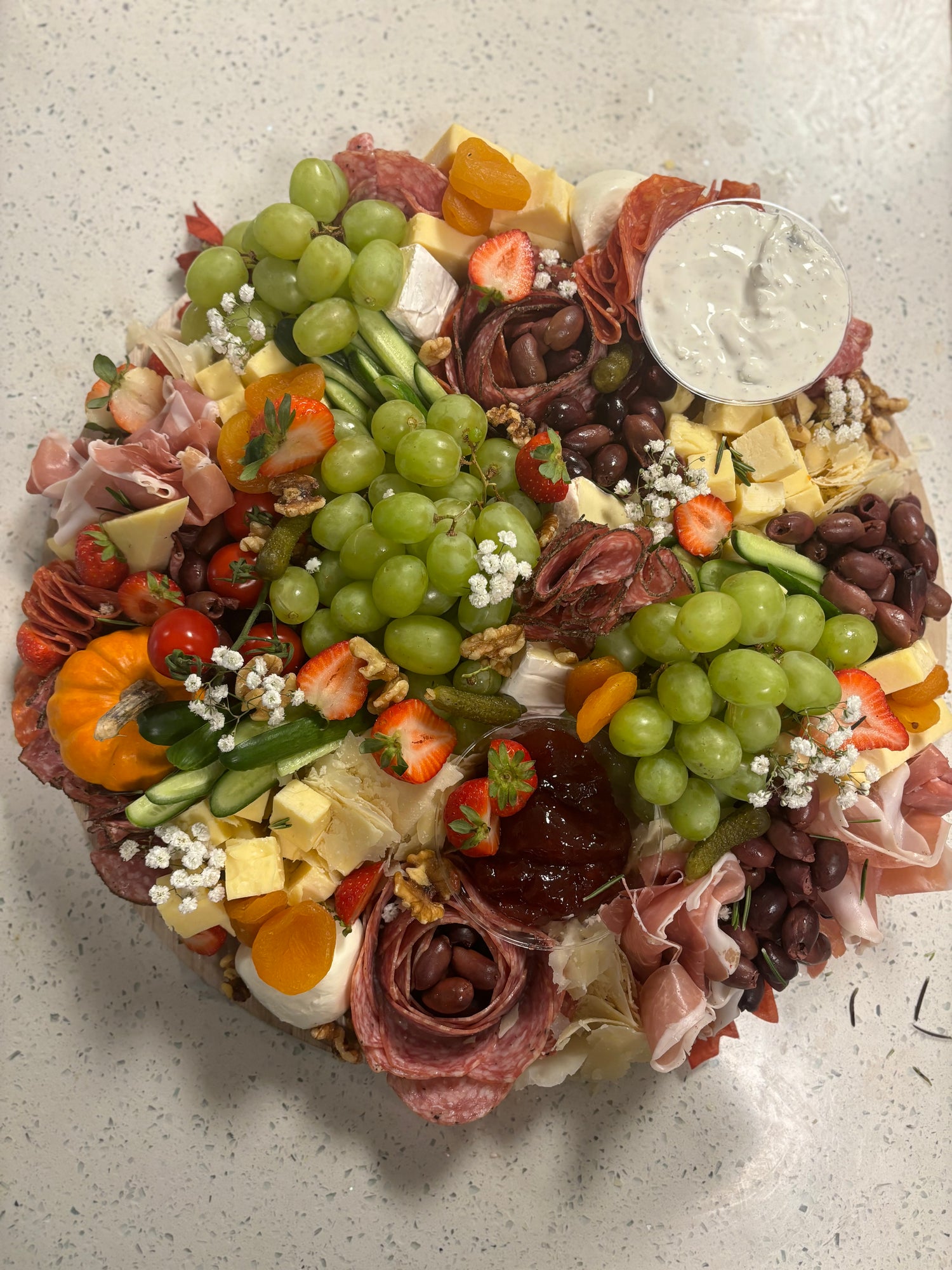
Essential Elements for Your Gathering
- Select a variety of textures and flavors for balance
- Include something for every dietary preference
- Add visual interest with colorful fruits and garnishes
- Provide proper serving utensils for easy sharing
- Consider the flow of your space for optimal placement
In a city where who you know shapes what you can build, the ability to introduce people well is one of the most undervalued social skills a person can develop. It is also, once you understand the structure, one of the most learnable.

Why Most Introductions Fail
The failure mode of the average introduction is not rudeness or inattention. It is a generality.
"This is James — he works in tech." "This is Sarah — she's a lawyer." These statements are technically accurate and socially useless. They give the person receiving the introduction nothing to work with. They describe a professional category, not a person. They open no doors and invite no questions because there is nothing specific enough to ask about.
The introduction that fails is the one built around what a person does. The introduction that works is the one built around who a person is — or more precisely, around one specific and interesting thing about them that the other person could not have known and cannot resist asking about.
This distinction sounds simple. It requires more effort than most people bring to it. The host who introduces guests well has thought, before the gathering, about each person they plan to connect with, about what is genuinely interesting about them, about what the specific thread is between them and the person they are about to meet. They arrive at the gathering having done this work in advance. The introduction itself takes fifteen seconds. The preparation is what makes those fifteen seconds land.

What the Research Shows About Social Facilitation
The psychology of social introduction draws on a body of research about what makes initial interactions productive rather than superficial.
Arthur Aron's influential work on interpersonal closeness found that the speed and depth at which two people develop a genuine connection is significantly influenced by the quality of the information they have about each other at the moment of introduction. Specifically, people who are introduced to a specific, interesting detail about the other person, something beyond their name and professional role, develop a sense of connection more rapidly and more durably than people who are introduced with generic information.
The mechanism Aron identified relates to what he called "self-expansion", the human tendency to find other people compelling when they represent access to knowledge, perspectives, or experiences that expand our own sense of the world. A specific, interesting detail signals to the person receiving the introduction that the person they are about to meet has something worth knowing. It creates anticipation rather than obligation. The conversation that follows is motivated by genuine curiosity rather than social courtesy.
Research on network formation adds another dimension. Sociologist David Krackhardt found that the person who makes an introduction, the host, the connector, the one who brings two people into proximity and gives them a reason to talk, occupies a position of significant social power and trust. The quality of the introductions a person makes over time shapes the reputation they develop in their social network. Hosts who introduce people well become known as connectors, the people whose gatherings are worth attending because they reliably produce encounters that go somewhere.
This reputation compounds. The connector becomes the gravitational center of a social network. The people they introduce remember not just each other but the person who made the introduction possible. In a city built on relationships, this is a form of social capital with real and lasting value.

The Three-Part Structure of an Introduction That Works
The introduction that produces a genuine connection is not a formula exactly; it is a structure with room for the host's specific knowledge and judgment within it. But the structure is consistent across the introductions that work, and its absence is consistent across the ones that do not.
Part One: Both Names, Said Clearly
This sounds trivial. It is not.
In a crowded room, people hear names imperfectly and retain them poorly, especially when they are in a mild state of social alertness, which is the state most people are in when they arrive at a gathering. A host who says both names clearly, with a brief pause between them, gives each person a reasonable chance of retaining what they have just heard. A host who says the names quickly, as a formality on the way to the more important parts of the introduction, has started the interaction with a deficit.
If the room is loud, say the names twice. Not as a correction, as a natural rhythm. "This is James, James, this is Sarah." The repetition is not awkward. It is considerate. And the person whose name is said clearly in a loud room remembers the host who made the effort.
Part Two: One Specific and Interesting Detail About Each Person
This is where most introductions fail, and it is where the preparation pays off.
The detail needs to be specific enough to invite a question. Generic details, professional categories, vague descriptions, and titles do not invite questions because there is nothing concrete enough to ask about. Specific details do, because they are particular enough to pique curiosity and open-ended enough to be explored.
Consider the difference between these two introductions of the same person:
"This is James, he works in technology."
"This is James, he just spent eighteen months building digital infrastructure for rural health clinics in Rwanda. He moved back to DC last month."
The first closes the conversation before it begins. The second opens three or four possible threads simultaneously. The person receiving the introduction cannot help but want to know more. The conversation that follows does not require effort to sustain because the curiosity is genuine.
The detail does not need to be professionally impressive. It needs to be human. Something that reveals a dimension of the person beyond their role. "She just started hosting a monthly dinner in her apartment that has turned into something of a DC institution." "He grew up in New Orleans and has strong opinions about what counts as a proper gumbo, which he will share if you ask." These details work because they make the person real, not because they are impressive.

Part Three: The Thread, One Sentence That Connects Them
This is the part that elevates a good introduction into a great one — and the part that requires the most preparation and the most knowledge of both people.
The thread is the specific, honest connection between the two people being introduced. Not a forced parallel. Not a vague similarity. A genuine point of contact that gives both people an immediate reason to be in conversation with each other, rather than merely polite to each other.
"You two are both thinking about the same problem from completely different angles — I wanted to see what happens when you compare notes."
"She just moved to DC from Lagos. You spent three years there working on infrastructure. I thought you might have something to say to each other."
"He's trying to build something similar to what you built in your previous role. I thought it would be useful for you to talk."
The thread does not have to be professional. It can be personal — a shared experience, a shared curiosity, a shared context. What it cannot be is vague. "I think you two would really get along" is not a thread. It is a prediction with no information attached to it. Both people are left wondering why, which is not a productive starting point for a conversation.

The Step That Most Hosts Skip
After the introduction, after the names have been said clearly, after the specific details have been offered, after the thread has been named, the host's job is to step away.
Not to hover. Not to bridge the silence. Not to stay and manage the conversation in its early moments. Step away.
This step is counterintuitive. It feels like abandonment. It feels like leaving two people to fend for themselves. But what it actually does is give both people the privacy to find their own footing, to ask the questions the introduction invited, to follow the thread without an audience, to let the conversation develop at its own pace without the social pressure of being observed by the person who created the moment.
Two people who have been given a specific, interesting detail about each other and left alone will almost always find their way into a genuine exchange. The detail does the work. The host's job was the introduction. Their job is what comes next.
The host who stays too long, who tries to keep the conversation going, who fills silences that are not actually problematic, is signaling that they do not trust the introduction they just made. Trust it. Step back. Watch from across the room as the thing you created develops without you.

Preparing Introductions Before the Gathering
The introductions that land are rarely improvised. They are the product of five minutes of thinking done before the gathering begins, a quiet moment in which the host considers who is coming, who does not know each other, and what the specific thread between them might be.
This preparation does not require a spreadsheet or a formal process. It requires sitting with the guest list for a few minutes and asking: who in this room does not yet know who else? And for each pairing: what do I know about each of them that the other one would find genuinely interesting? And: is there a thread?
Three prepared introductions are a reasonable goal for any gathering. Not all three will happen. One of them will happen at a moment when both people are already in conversation with someone else. One of them will happen, but turn out to have less chemistry than expected. One of them, if the preparation was good, will produce the kind of exchange that both people remember and that the host is quietly proud of for the rest of the evening.
That one introduction is worth all the preparation it required.

The Introduction as the Host's Primary Social Function
There is a version of hosting that is primarily logistical, managing the food, managing the flow, managing the comfort of the room. This version of hosting is exhausting and produces gatherings that are functional but rarely memorable.
There is another version in which the logistics are handled, the food is ordered and beautiful, and in the center of the room, it requires no further management, and the host's entire attention is on the room itself. On who is in it, who does not know who, where the conversations are thriving, and where they have stalled. On the introductions that need to be made and the moments that are right for making them.
This version of hosting is energizing rather than exhausting because the work it asks for is the work of genuine human attention. It asks the host to be curious about their guests, to know something real about each of them, to hold the social architecture of the room in their awareness, and respond to what they observe.
The introduction is the primary tool of this kind of hosting. It is the intervention that changes the social trajectory of an evening, that takes two people who were never going to find each other and puts them in the same conversation, with a reason to be there, and the specific information that turns obligation into curiosity.
In a city where the right introduction can change the course of someone's professional life, their social life, or both, the host who makes them well is doing something that matters well beyond the evening itself.

The Guest Introduction Template in the Wedge-In Connection Starter Kit gives you the exact framework, a fillable card for each introduction you plan to make, with the specific detail fields and the thread prompt built in.
Free download at theultimatenosh.com/pages/connection. Bring it to your next gathering already filled out, and watch what happens to the room.