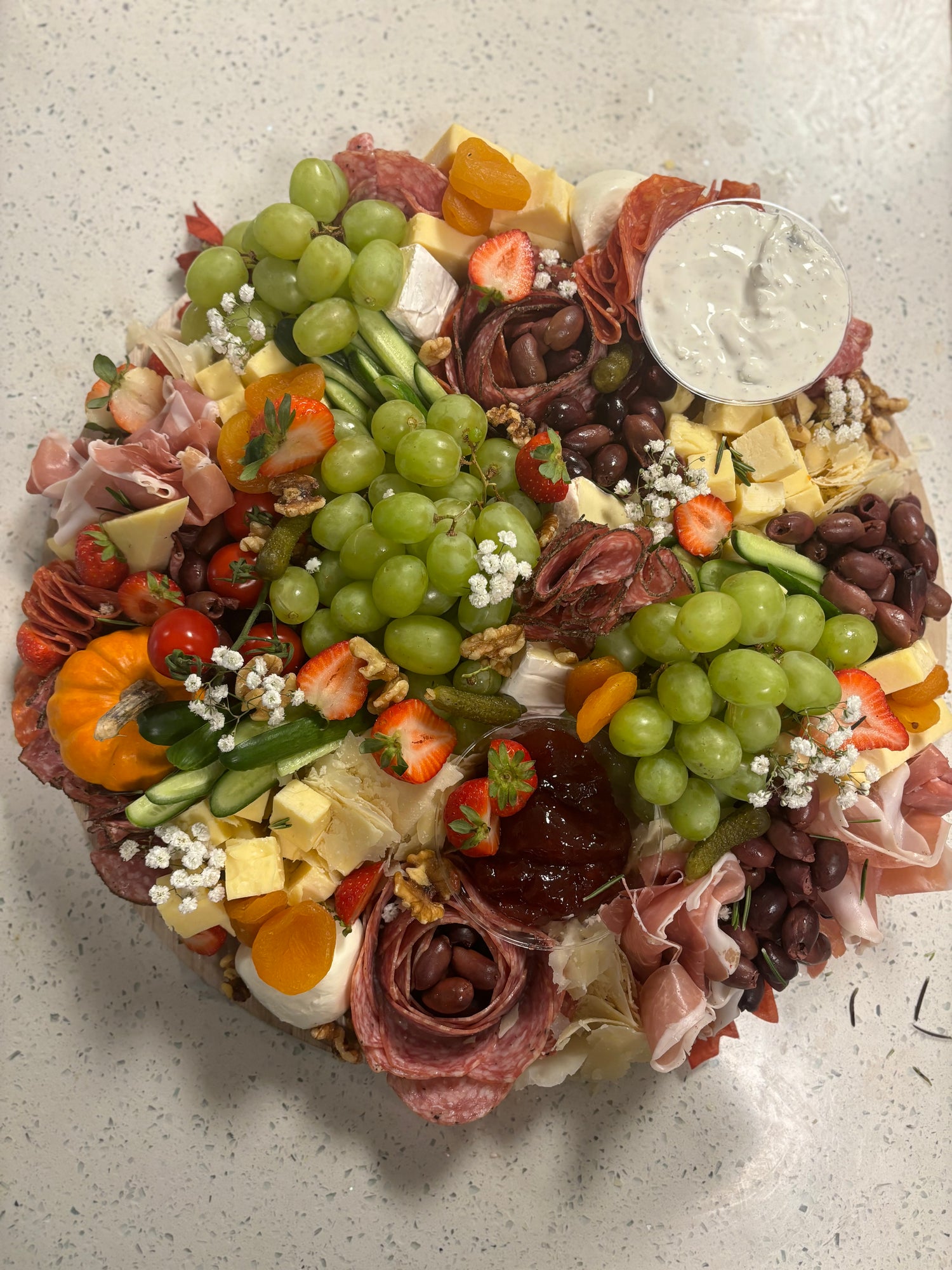


At some point in the last several years, most people in Washington DC made an unspoken decision. They decided that gathering, the real kind, at someone's home, with a small group and nowhere to be for a few hours, was something they would do more of. Later. When things settled down. When the apartment was ready. When the calendar opened up.
The calendar has not opened up. It will not open up. And the community that was supposed to form in the margins of a busy life has not formed, because community does not form in margins. It forms at tables, on purpose, over and over again, until the showing up becomes the thing itself.
This is what the research on social bonding keeps returning to. Not the quality of individual interactions. Not the size of a social network. The one variable that most reliably predicts the strength, depth, and durability of adult relationships is simple, unsexy, and almost entirely overlooked in a culture that prizes the spectacular over the consistent.
Frequency.
Creating Meaningful Gatherings
- Create a welcoming atmosphere for all guests
- Plan for easy conversation and mingling
- Include options that bring people together
- Consider the comfort and flow of your space
- Focus on shared experiences over perfect details

What Repetition Actually Does to a Relationship
The research foundation here comes from multiple directions and arrives at the same place.
Sociologist Robert Putnam, in his landmark work on social capital, identified that the decline of recurring social rituals, the bowling league, the neighborhood dinner, and the standing gathering, was the single most significant driver of community erosion in American life over the past several decades. Not the absence of interest in connection. Not a decline in social skills. The disappearance of the recurring structure that gave a connection a place to happen consistently.
Putnam's finding was about communities at scale. The social psychology research narrows it to the individual level and arrives at the same conclusion. A 2018 study published in the Journal of Social and Personal Relationships found that it takes approximately 50 hours spent together to move from acquaintance to casual friend, approximately 90 hours to move to a genuine friend, and approximately 200 hours to develop a close friendship. These hours cannot be front-loaded. They accumulate over time, across repeated interactions, in the ordinary texture of shared presence.
A monthly dinner with a consistent group of six people accumulates approximately 72 hours of shared time in a single year, assuming three-hour gatherings. By the end of year one, the people around that table have crossed the threshold from casual friends into something more durable. By the end of year two, they have built the kind of relationship that survives career changes, neighborhood moves, and the general reshuffling that DC does to its residents every few years.
This is not an accident. It is arithmetic. The recurring dinner is a compounding investment in the relationships that matter most.

Why the DC Context Makes This Urgent
Washington DC is a city that makes adult friendship structurally difficult in ways that are rarely named directly.
Most adults in DC arrived here from somewhere else. They built their foundational friendships, the deep ones formed in college, in early adulthood, in the years before professional identity became the primary lens through which social connection was filtered, in other cities. They carried those relationships into DC and have been trying to maintain them across geography while simultaneously trying to build new ones in a city that does not make that process easy.
The result, for many DC professionals in their 30s and 40s, is a social life that feels both full and somehow thin. There are people. There are events. There are contacts and colleagues and friendly acquaintances. And there is a persistent, low-grade awareness that something is missing, specifically, the kind of relationship where the other person knows your full story, not just your current chapter.
Building that kind of relationship in a transient city requires a strategy that accounts for the transience. The one-off gathering, no matter how successful, does not build it. The occasional catch-up dinner, scheduled three weeks out and rescheduled twice, does not build it. What builds it is the recurring structure, the gathering that happens not because the stars aligned but because it is the first Thursday, and that is when it happens.
The recurring structure survives the things that kill casual social connections in DC. It survives the busy period. It survives the month when nobody can find a date that works. It survives the departure of individual members and the arrival of new ones. When the gathering is the constant rather than the specific people in it, the community can absorb the changes the city imposes on it.

The Anatomy of a Recurring Gathering That Actually Lasts
Not all recurring gatherings survive past the third month. The ones that do share a specific set of structural features that have less to do with the quality of the food or the logistics of scheduling and more to do with the social design of the gathering itself.
The right size from the start. Research on group dynamics consistently identifies four to six people as the optimal size for a recurring social gathering. Small enough that everyone is in the same conversation. Large enough that the dynamic is social rather than intense. At this size, a single absence does not collapse the gathering, and a single new addition does not change its character. The group can absorb the normal rhythms of busy adult life without dissolving.
Above eight people, a recurring gathering starts behaving like a party rather than a community. Conversations fragment. The shared experience that makes the next gathering feel anticipated rather than obligatory becomes harder to produce. The gathering becomes an event to attend rather than a ritual to belong to. Keep it small deliberately.
A committed initiator. Every recurring gathering that lasts has one person who holds it together. Not because they do all the work, but because they hold the intention. They send the reminder text. They rebook when a month gets skipped. They make it clear, through repeated action, that this gathering exists and matters. In the absence of this person, even the most enthusiastic group will gradually let the gathering drift.
If you are reading this and thinking about starting a recurring gathering, you are almost certainly the person who needs to be the initiator. The people around you want this. They are not going to organize it. They will come when you do.
A low and consistent bar for what counts as showing up. The recurring gatherings that fail tend to fail because the implicit standard for each gathering, the food, the preparation, and the social performance, has been set too high. When hosting requires a performance, people become reluctant to host. When attendance requires having had a good week, people find reasons not to come.
The recurring dinner that lasts is the one where showing up is enough. Where the food is handled, ordered, delivered, arranged, present so that the host can be a person rather than a production. Where the gathering can happen in someone's living room with paper napkins, and no one thinks less of it, where the bar for a successful evening is simply that the people were there.
This is not a lowering of standards. It is a clarification of priorities. The gathering exists for the people, not for the performance of the gathering.
An open seat. The most resilient recurring gatherings maintain one structural feature that many do not think to build in from the start: the standing invitation to bring someone new. Not every month, not as a requirement, but as a standing permission. The recurring dinner that occasionally includes a new person, a friend of a friend, a recent transplant, someone one of the regulars has been wanting to introduce, stays alive and generative in a way that a closed group gradually does not.
New people bring new energy, new perspectives, and new weak ties that connect the core group to wider networks. They also ensure that when a member of the core group eventually leaves DC, the gathering can absorb their absence without collapsing.
A ritual within the ritual. The recurring gatherings that people reference for years tend to have a small internal ritual, something that marks this gathering as different from a generic dinner. It might be a question that gets asked every month. It might be that someone always brings the cheese and someone always brings the wine, and someone always arrives last, and nobody minds. It might be that there is always a board in the center and the gathering does not officially start until everyone has reached for it.
The ritual is not the point. The shared history of the ritual is the point. Over time, the small recurring gestures that mark the gathering become part of the gathering's identity, the thing people reference when they tell someone else about this group they are part of.

How to Start One This Month
The most common reason people do not start a recurring gathering is not a lack of desire. It is the conviction that the conditions are not yet right. The apartment needs work. The timing is bad. The right group of people has not fully assembled yet.
These are the wrong criteria. The right criteria are simpler: four to six people who would say yes, a date in the next three weeks, and something beautiful in the center of the table that handles itself so the host can handle the room.
Here is what the first gathering needs to accomplish, and only this: it needs to be good enough that everyone wants to do it again. That is the entire goal of the first gathering. Not to establish a tradition or build a community or host perfectly. To produce the specific outcome, everyone wants to do it again, which makes the second gathering possible.
The second gathering makes the third possible. The third makes it a habit. The habit, sustained across a year, becomes a community.
Before the first gathering ends, say the sentence out loud: "We're doing this again next month. At the same time. I'll text the details." That sentence is the most important thing the host says all evening. It is the bridge between a nice dinner and a recurring one. It is the moment the community begins.

What the Table Looks Like When It Works
Three years from now, if this gathering holds, the people around that table will know things about each other that have nothing to do with professional identity. They will have been present for the hard months and the good ones. They will have watched each other change jobs, change relationships, change neighborhoods, change. They will have accumulated the shared history that makes real friendship different from a professional connection.
They will also, almost certainly, still be gathering in Washington DC after some of the city's usual churn has taken people in and out of the group. Because the gathering was never about the specific people. It was about the table. And the table stayed set.
The research on social resilience, on longevity, on what actually sustains people through the inevitable difficulty of adult life, consistently identifies this kind of relationship, the ones built through repeated ordinary presence, as among the most health-protective and psychologically stabilizing that humans can form. Not the spectacular friendship. The consistent one.
It starts with a date, a group of four to six, and something in the center of the table that gives everyone a reason to stay.

If you are ready to set the date, the Wedge-In Connection Starter Kit includes a complete Recurring Gathering Planner, the core group worksheet, the six-month date-lock table, and the invitation framework that makes the first text easy to send. Free download at theultimatenosh.com/pages/connection.

When you are ready for the table itself, the board that handles the center of the room, so you can handle the room, this is where DC's most intentional hosts start.