

You've decided to host. You've got the guest list locked. You've even picked your date. But now you're staring at the blank canvas of a wooden board, wondering: where do I even start?
Whether you're creating your first charcuterie board or your fiftieth, assembly can feel overwhelming. There are so many choices—what cheeses to include, how much of each item, what order to arrange them in, and how to make it look effortlessly beautiful rather than haphazardly thrown together.
That's exactly why District Boards exist. But before we talk about why our pre-assembled boards are game-changers, let's walk through the art and science of building a stunning charcuterie board from scratch. Understanding these principles will help you appreciate the expertise behind a professionally curated board—and show you why letting the experts handle it is worth your time.

Before You Place a Single Item on the Board
- Decide whether the board is the main event or a supporting act, because that determines how much of everything you need
- Pick your board size based on the number of guests, not the number of ingredients you want to fit
- Set your cheeses out thirty minutes before guests arrive so they reach room temperature, where the flavor actually lives
- Gather every serving utensil, small bowl, and napkin before you start arranging, because stopping mid-build to dig through drawers breaks your momentum
- Accept that your first board will not look like the ones on Instagram, and that is fine, because your guests are there for the food and the company
Understanding Charcuterie Board Fundamentals
Before you place a single item on your board, you need to understand what makes a charcuterie board actually work.
The Golden Rule: Balance and Variety
A great charcuterie board isn't just a random collection of stuff you found in the deli section. It's a carefully thought-out composition of flavors, textures, and colors that complement each other. You're creating an experience, not just a snack platter.
The best boards balance:
Flavors: Salty, sweet, savory, and tangy elements all working together. A creamy brie pairs beautifully with something tart (think jam or pickled vegetables). Salty prosciutto contrasts perfectly with sweet grapes. This interplay is what keeps people coming back for another bite.
Textures: Soft (cheese), chewy (dried fruit), crunchy (nuts, crackers), and smooth (spreads). Variety in texture keeps the eating experience interesting and prevents the board from feeling monotonous.
Colors: Think of your board as a painting. You want visual interest and vibrancy. Deep purples, bright reds, creamy whites, and golden hues should all be represented. This isn't just about beauty—color often indicates different flavor profiles.
Quantity: There's a difference between abundance and overcrowding. You want enough items to feel generous without making the board look like a chaos of food. A good rule of thumb is to fill about 75% of your board, leaving some breathing room.

The Five Essential Categories
Every stellar charcuterie board includes these five components. Master these, and you're halfway to board excellence.
1. Cheeses (40% of Your Focus)
Cheese is the star. Aim for three to four types that offer variety:
- Hard cheese (Aged Manchego, Pecorino Romano, or Parmigiano-Reggiano): Intense, salty, often with crystalline texture
- Soft cheese (Brie, Camembert, or Burrata): Creamy, mild, luxurious
- Blue or pungent cheese (Gorgonzola, Roquefort, or Stilton): Bold, tangy, for adventurous eaters
- Semi-soft cheese (Gruyère, Taleggio, or Fontina): Balanced flavor, works well with everything
Cut your cheeses in different shapes and sizes—some in chunks, some in slices, some left as small wedges. Whole chunks make people feel like they're getting something special; slices are convenient. Mix it up.
Pro tip from District Boards: Arrange cheeses in triangular wedges radiating from the center, or group similar types together. This creates visual order while keeping the board organized and easy to navigate.
2. Cured Meats (25-30% of Your Focus)
Quality matters here. Invest in good charcuterie—the difference between grocery store ham and authentic prosciutto di Parma is night and day.
Include variety:
- Prosciutto or Jamón Serrano: Delicate, salty, slightly sweet. These should be folded or loosely arranged for visual interest.
- Salami: Look for different types—Spanish chorizo, Italian soppressata, or French rosette. Slice thin for accessibility.
- Pancetta or Guanciale: If you're feeling fancy, these cured pork options add depth.
- Soppressata or Coppa: Milder than some options, these work well for less adventurous eaters.
Slice most items, but leave some whole or partially wrapped so guests can see the quality. This also reduces the space they take up on the board.
3. Fruits (Fresh and Dried)
Fruit provides crucial sweetness and brightness. Include both fresh and dried:
Fresh: Grapes (red and green offer color contrast), apple slices, pear slices, figs, berries, or orange segments. Fresh fruit should be added close to serving time to prevent browning or drying out.
Dried: Apricots, cranberries, figs, and dates. These keep well, add chewy texture, and provide concentrated sweetness that pairs beautifully with salty cheeses and meats.
Pro tip: Cut your apples and pears just before serving and toss them with a tiny bit of lemon juice to prevent oxidation. Your board will look fresh and professional, not brown and tired.
4. Nuts and Seeds
Nuts add crunch and are surprisingly versatile:
- Marcona almonds: Buttery, slightly sweet, always impressive
- Candied pecans or walnuts: These work beautifully with cheese and sweet items
- Roasted salted almonds: Classic and reliable
- Pistachios: Great color contrast and slightly savory
- Toasted seeds: Pumpkin or sunflower seeds add unexpected crunch
Toast your own nuts lightly if you can—they taste better and feel more premium. Use about ¼ to ½ cup per board, depending on size.
5. Bread, Crackers, and Vehicles
These are your board's unsung heroes. They're what guests use to carry everything. Quality here matters because cheap crackers fall apart and ruin the experience.
Crackers:
- Water crackers (minimal flavor, let the toppings shine)
- Seeded or multigrain (adds texture and visual interest)
- Breadsticks or grissini (elegant and easy to grab)
- Gluten-free options if guests need them
Bread:
- Toasted baguette slices
- Focaccia squares
- Sourdough
Include enough that people aren't fighting over the last cracker, but don't overwhelm your board with bread. A separate small bowl or basket nearby prevents the board itself from becoming carb-heavy.
The Supporting Players
These items aren't mandatory, but they elevate your board from good to unforgettable:
Spreads and Condiments:
- Fig jam (the classic for a reason—it pairs with everything)
- Honey (drizzle it, or offer in a small dish; it's magic with strong cheeses)
- Whole grain mustard
- Hot pepper jelly
- Fruit preserves
- Honeycomb (if you're feeling luxe)
Vegetables:
- Cornichons or pickles (acidic, refreshing contrast)
- Marinated olives (salty, briny, excellent with cured meats)
- Roasted red peppers
- Marinated artichoke hearts
- Cherry tomatoes
- Cucumber slices
Specialty Items:
- Marinated mozzarella balls
- Cured fish like anchovies (for the adventurous)
- Edible flowers for garnish
- Fresh herbs for color and freshness

The Assembly Process: Step-by-Step
Now that you understand the components, let's talk execution.
Step 1: Choose Your Board
Size matters. A 12-inch board serves 4-6 people comfortably. A 16-18 inch board serves 8-12. For larger groups, use multiple boards rather than cramming everything onto one giant surface.
Wood is classic and beautiful. Slate, marble, and ceramic boards work too, but wood feels warmer and more traditional. Whatever you choose, make sure it's clean before you start.
Step 2: Create Your Layout (The Invisible Grid)
Before you place anything, imagine your board divided into sections. Many professionals use a clock-like arrangement or radiating wedges. This invisible structure prevents chaos.
Start by placing your cheeses in strategic locations—usually toward one end or in the center. Leave space between them so they don't look crowded. You want each cheese to have its own moment.
Step 3: Fill in with Meats
Fold or drape your cured meats around the cheese. This creates movement and visual interest. Don't just lay everything flat—fold prosciutto into quarters, bunch salami, let pancetta create waves across the board.
Step 4: Add Fruits (Strategic Placement)
Scatter fruits throughout to break up the protein-heavy areas. Fruits act as visual punctuation—they provide color and signal to guests that there are fresh, lighter elements here too. Fresh grapes work beautifully nestled next to creamy brie. Dried apricots look stunning against dark prosciutto.
Step 5: Incorporate Nuts and Crunch
Sprinkle nuts around the board. These fill gaps, add texture, and provide visual interest. Candied nuts look intentional; plain roasted nuts are classic. Aim for strategic placement rather than scattering them everywhere.
Step 6: Add Your Spreads
Place jams, honey, and mustards in small bowls or ramekins and position them on the board. These should be easily accessible—usually in corners or edges where they won't interfere with cheese or meat placement.
Step 7: Arrange Crackers and Bread
This is where many people go wrong. Don't cover the board with crackers. Instead, create "zones" or fan arrangements of crackers throughout, leaving plenty of board visible. This makes the board feel sophisticated rather than carb-heavy.
If your board gets crowded, place extra crackers in a nearby basket. This solves the space problem and actually looks more intentional.
Step 8: Add the Finishing Touches
Fresh herbs (rosemary sprigs, thyme, or basil) add color and fragrance. A drizzle of quality olive oil or honey over a cheese wheel signals luxury. A few edible flowers or microgreens add that Instagram-worthy factor.
Step 9: Step Back and Assess
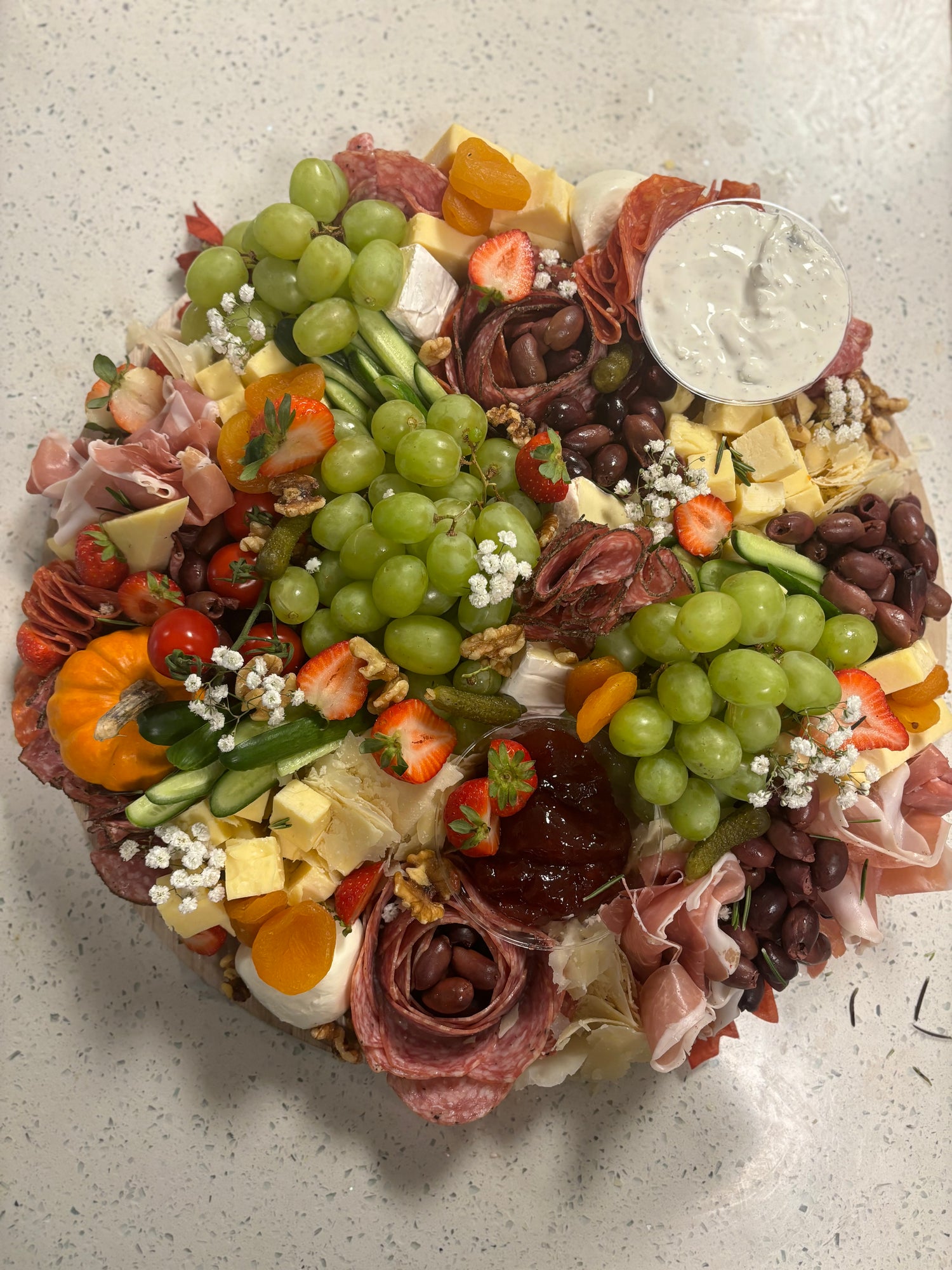
Look at your board from above. Is there visual balance? Do you see all five categories represented? Are there any large gaps or overcrowded areas? Make adjustments. The goal is organized abundance, not chaos.

Common Charcuterie Board Mistakes (And How to Avoid Them)
Mistake 1: All Soft Cheeses or All Hard Cheeses
You need variety. Three hard cheeses and no soft cheese means no luxury and less flavor variety. Mix it up.
Mistake 2: Forgetting About Color
A board with beige, white, and brown items looks boring no matter how good it tastes. Include items with natural color—berries, grapes, olives, roasted peppers. Color signals freshness and abundance.
Mistake 3: Skimping on Quality
Cheap salami, mass-produced cheese, and stale crackers will hurt your reputation faster than you think. Invest in quality ingredients. Your guests will taste the difference.
Mistake 4: Overcrowding
When every inch of your board is covered, it looks chaotic and actually makes guests less likely to eat. They feel like they're destroying art. Leave space. It's sophisticated.
Mistake 5: Assembling Too Early
Fresh items like fruit and delicate meats should go on the board closer to serving time. Assemble your base 2-3 hours ahead, but add fresh components 30-60 minutes before guests arrive.
Mistake 6: Forgetting About Seasonality
A summer board looks different from a winter board. Winter boards can include heartier items like nuts and dried fruits. Summer boards shine with fresh berries, light cheeses, and crisp vegetables. Work with the season.
Board Size Guide: How Much Do You Actually Need?
This is the question everyone asks, and the answer matters because you don't want to waste money or run out of food.
For 4-6 people: One 12-inch board with approximately 1 lb cheese, ¾ lb cured meats, ½ cup nuts, and 1-2 cups fresh fruit
For 8-12 people: One 16-18 inch board or two 12-inch boards with approximately 2 lbs cheese, 1.5 lbs cured meats, 1 cup nuts, and 2-3 cups fruit
For 12-20 people: Two 16-18 inch boards with approximately 3 lbs cheese, 2 lbs cured meats, 1.5 cups nuts, and 3-4 cups fruit
For 20+ people: Multiple boards or a mix of boards plus a board or two from District Boards
Pro tip: It's better to have slightly too much than too little. People feel more comfortable eating when there's visual abundance. Plus, leftover cheese is never a tragedy.

The Professional Touch: What the Experts Know
Here's where District Boards brings real expertise. When you work with a professional board company, you get:
Sourcing Excellence: Professionals have relationships with specialty food suppliers. They know which prosciutto to order, which farms produce the best cheese, and where to source items that actually taste good—not just look good.
Proportion Mastery: We know exactly how much of each item to include so that the board feels abundant, balanced, and doesn't run out mid-party. This comes from hundreds of boards assembled.
Seasonality and Timing: We understand which items are in season, which pair best in different times of year, and how to select items that will stay fresh throughout your event.
Design Expertise: There's an art to arrangement that goes beyond just knowing the components. It's about creating visual flow, ensuring every item is accessible, and making the board look professionally curated without appearing overdone.
Customization Intelligence: When you work with District Boards, our team understands dietary needs, flavor preferences, and guest dynamics. We're not just throwing items on a board; we're building an experience tailored to your event.
Time Savings: Let's be real—assembling a stunning charcuterie board takes time and skill. When you order from District Boards, we handle the sourcing, prep, and assembly. You get all the credit without the stress.
When to DIY vs. When to Call the Professionals
DIY If:
- You have time to shop, prep, and assemble carefully
- You enjoy the creative process of building a board
- You're hosting a small, intimate gathering (under 8 people)
- You have specific items you want to include that mean something to you
Order from District Boards If:
- You're hosting 8+ people
- You want to minimize stress and maximize your presence at the party
- You want professional-level presentation without the effort
- You're unsure about sourcing quality ingredients or proportions
- You want customization based on dietary needs or preferences
- You value your time and sanity more than the DIY process
Let's be honest—most people fall into the second category, and that's okay. Recognizing when to delegate is a sign of intelligence, not laziness.

Taking Your Board to the Next Level
Whether you're assembling it yourself or ordering from District Boards, here are pro techniques that separate good boards from extraordinary ones:
Height and Dimension
Don't lay everything flat. Use small serving bowls or ramekins to elevate jams and spreads. Stack some items. Create visual layers. This makes the board more dynamic and interesting.
Odd Numbers Rule
Three types of cheese. Five types of nuts. Arrange items in odd numbers. This is a design principle that makes things look intentional and balanced.
The Power of Repetition
Repeat colors and elements throughout the board. If you use grapes in one spot, include them elsewhere too. This creates visual cohesion.
Negative Space Matters
Don't fill every gap. Leave breathing room. This makes your board feel sophisticated and prevents guest overwhelm.
Garnish Thoughtfully
A sprig of rosemary, a scattering of edible flowers, or a light dusting of fleur de sel transforms a good board into a stunning one. But don't overdo it. Subtle is sophisticated.
Storage and Prep Tips
24 Hours Before:
- Purchase all non-perishable items
- Order perishables for next-day delivery if possible
- Clean your board thoroughly
4-6 Hours Before:
- Set up your base (cheeses, meats, nuts, bread)
- Place spreads in their serving vessels
- Arrange everything except fresh fruit
1-2 Hours Before:
- Add fresh fruit
- Add any delicate items
- Final garnishes
- Step back and admire
During Your Event:
- Monitor what's running low
- Refresh platters if needed
- Don't stress if items get rearranged by guests (that means they're eating!)
The District Boards Advantage
Here's the truth: assembling a truly beautiful, balanced charcuterie board requires knowledge, experience, sourcing relationships, and time. District Boards brings all of this together.
When you order from us, you're not just getting food on a board. You're getting:
- Carefully sourced, premium ingredients that actually taste exceptional
- Professional arrangement that's Instagram-worthy but still accessible
- Perfectly calculated quantities so nothing runs out prematurely
- Customization based on your guest count and preferences
- The ability to focus on hosting instead of stressing about food prep
- A board that looks like you spent hours perfecting it—even if you just took it out of a box
You get all the credit for hosting, none of the stress.
Final Thoughts: Building Confidence as a Host
Whether you choose to assemble your own board or order from District Boards, understand this: a great charcuterie board isn't about perfection. It's about balance, quality, thoughtfulness, and creating an environment where people feel welcomed and cared for.
Every time you host, you get better at understanding what works, what your guests love, and how to make the experience feel effortless (even when it's not).
But here's the thing—you don't have to learn everything through trial and error. That's why professionals exist. District Boards takes the learning curve and compresses it into one beautifully arranged board that you can be proud of.
So whether you're mastering the art of board assembly or deciding that professional curation is worth your investment, remember: the goal isn't to prove you're a gourmet chef. The goal is to create a gathering where people feel celebrated, fed well, and connected.
Everything else is just details.
Ready to create your masterpiece? Whether you're assembling your first board or ordering from the experts, visit theultimatenosh.com to explore District Boards options. We've done the research, built the relationships with suppliers, and perfected the art of curation. Let us handle the board so you can focus on the magic of gathering.