

There is a specific kind of loneliness that is difficult to explain to someone who has not experienced it.
It's not the loneliness of having no one. It is the loneliness of having plenty of people and still feeling like something essential is missing. A full calendar. A busy social life, by most definitions. Colleagues who would help in a professional crisis. A few close friends from college kept alive through group chats and annual visits. And yet, on an ordinary Tuesday evening, or in the middle of a difficult month, or when something genuinely good happens and there is no one to call who would fully understand the weight of it, a persistent, quiet awareness that the social life is somehow incomplete.
It's a structural gap. And understanding the structure, understanding that human connection is not one thing but several distinct things, each serving a different function, each requiring a different kind of relationship and a different kind of maintenance, is the first step toward building a social life that actually fills the gap rather than surrounding it.
The research on social networks and resilience identifies five distinct types of connection that a healthy, complete social life requires. Most people in Washington DC are well-resourced in one or two of them and significantly under-resourced in the others. Here is what each one is, what it does, and what happens when it is absent.
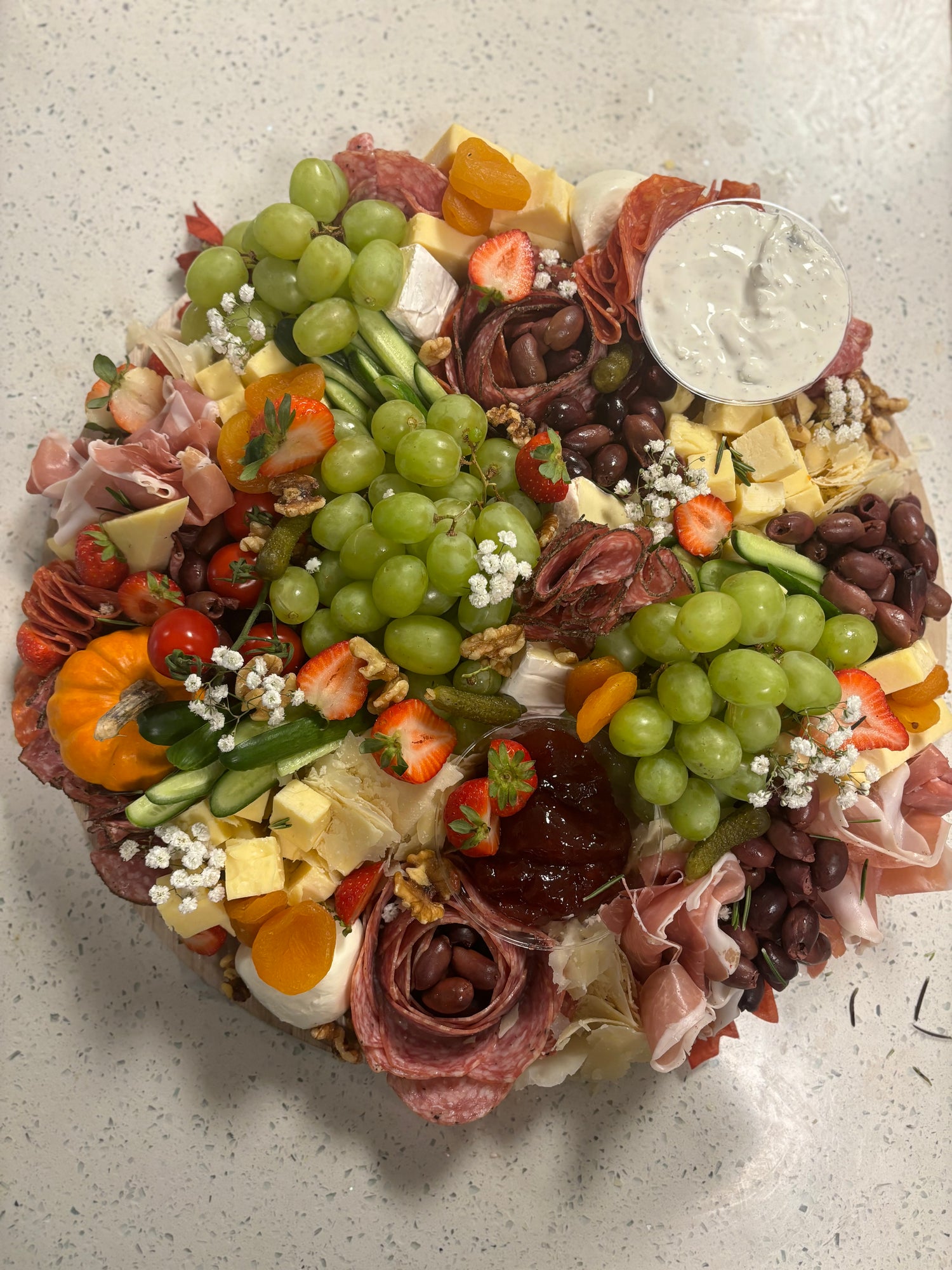
Creating Meaningful Gatherings
- Create a welcoming atmosphere for all guests
- Plan for easy conversation and mingling
- Include options that bring people together
- Consider the comfort and flow of your space
- Focus on shared experiences over perfect details

Type 1: The Anchor Relationship
The anchor relationship is the one that holds your full story.
Not your professional story, your whole story. The person who knew you before you became whoever you are now in DC. Who remembers the version of you that existed before the career, before the city, before the particular chapter you are currently in. Who can hold the accumulated weight of your history and reflect it back to you when the present moment feels like all there is?
Robin Dunbar's research on social layers identified the innermost circle, what he called the "support clique", as containing an average of five people. These are the relationships that provide the deepest emotional support, the most consistent presence across life transitions, and the greatest protection against the health consequences of loneliness. They are also the relationships that are most demanding to maintain and most susceptible to damage from neglect.
In DC, anchor relationships are under constant structural threat. People arrive here from other cities, which means their anchor relationships are often geographically distant, maintained through effort rather than proximity. The city's transience means that anchor relationships formed in DC can be disrupted by the same career changes and political cycles that brought people here in the first place.
What happens when anchor relationships are absent or neglected is well documented. People lose their sense of continuity, the feeling of being a whole person with a history rather than a current professional identity. They become more vulnerable to the identity disruptions that career changes, political transitions, and life setbacks produce. The research on resilience consistently identifies the anchor relationship as the most protective social relationship a person can have.
Building or maintaining an anchor relationship in a transient city requires one thing above all others: repetition. Not the annual visit, not the monthly text check-in, but the recurring shared presence, the dinner that happens every month, the gathering that makes the relationship a current one rather than a historical one. The anchor relationship that is not regularly refreshed through physical presence gradually becomes a memory rather than a living bond.

Type 2: The Challenging Relationship
The challenging relationship is the one that does not agree with you by default.
This is the relationship most people in DC have the fewest of — because DC, despite its apparent diversity of political opinion, has sorted itself into social communities of remarkable ideological and professional homogeneity. People in the same professional lane know each other, socialize with each other, and reinforce each other's existing frameworks for understanding the world.
The challenging relationship cuts across that homogeneity. It is the person whose background, experience, and perspective produce fundamentally different conclusions about the questions you both care about. Not an adversarial relationship — a genuinely curious one, in which both parties are interested in the other's thinking and capable of holding their own views lightly enough to actually hear something new.
The research on social cognition is unambiguous about what happens to thinking in the absence of challenge. Echo chambers are not merely a political phenomenon. They are a cognitive one. People who are surrounded primarily by people who share their existing frameworks become less capable of stress-testing their own assumptions, less able to anticipate the objections of people who think differently, and less intellectually resilient when those objections arrive in professional or public contexts.
The challenging relationship is not comfortable. It requires the capacity to be wrong, to update, to hold the discomfort of encountering a perspective that genuinely disrupts your own. It also requires the right environment, one that is warm enough and low-stakes enough that disagreement does not feel like a threat. This is one of the specific things the dinner table does better than any professional context: it creates the conditions in which challenge can be received as a gift rather than an attack.
Type 3: The Witness Relationship
The witness relationship is perhaps the most undervalued and most specifically missing from the social lives of high-achieving DC professionals.
The witness is the person who sees you, not your output, not your performance, not the version of you that shows up to professional contexts, but you. Who notices when something is off before you have named it yourself? Who celebrates the things that do not make it onto a resume or a LinkedIn profile. Who is present to the interior life of the relationship rather than its exterior results?
In a city where professional identity is the primary social currency, the witness relationship is countercultural. It requires showing up as a person rather than a professional, which is a vulnerability that the norms of DC professional culture actively discourage. The result is that many people who are deeply known in their professional context are almost entirely unknown as human beings by anyone in their daily social life.
The consequences are specific. Research on psychological well-being consistently identifies being known, genuinely known, across multiple dimensions of identity, as one of the most significant contributors to a sense of meaning and belonging. The person who has many professional relationships but no witness relationships is carrying the specific loneliness of being visible but unseen. Recognized but not known.
The witness relationship develops slowly and requires repeated contact across different contexts, not just work, not just one activity, not just the professional version of social life. It develops at tables, in the second hour of a gathering when the professional presentations have relaxed, in the ordinary accumulation of shared presence over time. It cannot be rushed. It can create the conditions for.

Type 4: The Cross-Silo Relationship
The cross-silo relationship is the one that exists outside your professional and social lane.
DC is a city organized into silos. Government stays with government. Nonprofits circulate within the nonprofit world. The creative community and the policy community, the diplomatic community, and the private sector all occupy the same geographic space and almost entirely separate social ecosystems. The sorting is not deliberate — it happens through the natural gravity of professional context, neighborhood, and social routine.
The cross-silo relationship crosses one of those boundaries deliberately. It is the government attorney who is close friend of the local artist. The NGO director whose recurring dinner includes a K Street lobbyist and a restaurant owner from Southeast DC. The relationship cannot be explained by professional utility because the professional worlds involved do not overlap.
The value of cross-silo relationships is documented in multiple research traditions. Mark Granovetter's weak ties research, already discussed in the context of networking, is directly relevant here; the information, opportunities, and perspectives that come through cross-silo relationships are consistently more novel and more generative than those that circulate within a homogeneous professional community. David Epstein's research on "range", on the cognitive advantages of people who have exposure to multiple domains, finds that cross-domain thinking is more creative, more resilient, and more capable of solving novel problems than domain-specific expertise alone.
Beyond the professional benefits, cross-silo relationships are the specific antidote to the social narrowing that DC's professional culture produces. They keep the social world wide. They introduce unexpected perspectives. They create the kind of dinner table where the conversation cannot be predicted in advance because the people around it are genuinely different from each other in ways that matter.
Type 5: The New Energy Relationship
The new energy relationship is the one that arrived recently, in your life or in the city, and whose freshness disrupts the comfortable consensus of the existing circle.
Every established social group eventually develops a shared worldview. Shared assumptions, shared blind spots, shared ways of talking about the things that matter. This is one of the benefits of a long-standing community, a shared language, a shared context. It is also one of its risks. The group that never admits anyone new gradually becomes a closed system, and closed systems become less generative over time.
The new energy relationship introduces something the existing group has lost, the fresh eye, the uninitiated perspective, the question that the group stopped asking because everyone assumed they knew the answer. The recent transplant who asks why DC works the way it does. The person is new to the industry and has not yet absorbed its unexamined assumptions. The friend of a friend who brings a completely different professional context and a completely different set of references.
This relationship is one of the specific arguments for the open seat, the standing invitation in any recurring gathering to bring one new person. Not every month, not as a requirement, but as a structural permission that keeps the gathering alive and generative over time.
The challenge with the new energy relationship is that it requires the existing group to tolerate a temporary disruption of its established dynamic. New people change the texture of a gathering. They ask different questions. They tell different stories. They do not know the shared references that signal belonging to the established group. This disruption is precisely the point. The group that can absorb new energy without feeling threatened by it is the group that stays alive.
 The Diagnostic Question
The most useful thing to do with this framework is not to read it but to apply it. Look at your current social life and ask, honestly, which of these five types of relationship is most under-resourced.
For most DC professionals answer is some combination of the witness relationship and the cross-silo relationship. The professional social life produces plenty of contact. It produces far less of the being-known and the genuine cross-pollination that these two relationship types provide.
For people who have been in DC for several years and have watched their social circle narrow as people have left, the answer is often the anchor relationship. The people who hold their full story are no longer local. The relationships that remain are newer and less layered. The recurring dinner is the most reliable tool for building new anchor relationships because it is the format that accumulates the shared history that anchor relationships require.
For people who are new to the city, and there are always people new to DC, the most urgent gap is usually the new energy relationship becoming something more durable. The transition from new arrival to established member of a community requires someone to pull them into a recurring structure. The open seat at someone's monthly dinner is often how that transition begins.

What to Do With the Gap
The gap this framework identifies is not a problem to be solved in one gathering or one month. It is a direction to move in, a clarification of what the social life needs that it does not currently have.
That clarification is itself valuable. Most people who feel the specific loneliness described at the beginning of this post, the loneliness of plenty, have not been able to name what is missing. They know something is absent. They do not know what. The framework gives them language for it, which is the first condition for doing something about it.
The second condition is a place to start. And the place to start is almost always the same: a small gathering, a consistent group, a recurring structure that gives the relationships time to develop into whichever type is most needed.
The table is where all five types of connections are built. Not in a single evening — across many of them, accumulated over time, in the ordinary practice of showing up and being present with the same people in the same place until the relationship becomes whatever it was always capable of becoming.

The full framework for building the gathering structures that develop each of these relationship types, including specific formats, group sizes, and social design principles, lives in the complete connection companion at theultimatenosh.com/pages/connection.

For the recurring gathering specifically, the format that builds anchor relationships and develops the witness dynamic over time, the Wedge-In Connection Starter Kit includes a complete Recurring Gathering Planner. Free download. Set the first date before you close this tab.